
The choir is actively preparing for the Blackheath Choir Festival to be held on 22-24 August, 2014. Our choir will sing on Sunday 24 at 10:30 AM. For more details and tickets, visit the Blackheath Choir Festival 2014 website

The choir is actively preparing for the Blackheath Choir Festival to be held on 22-24 August, 2014. Our choir will sing on Sunday 24 at 10:30 AM. For more details and tickets, visit the Blackheath Choir Festival 2014 website
In addition to Wikipedia (both the English version and the Arabic version), there are many sites on the net that provide information on Arabic music. One of these sites is the ARABIC MUSIC ARCHIVES. This website is full of information on history of Arabic music, description of various Arabic musical instruments, famous Arabic musicians, and provides free samples of Arabic music.
Arabic Music on Wikipedia (in Arabic)
Transliteration is representation of the characters of one alphabet (language) by the characters of another. The use of diacritics or digraphs solves the problem of different number of characters between the alphabets of the two languages.
Non-Arabic speaking members of the Andalus Arabic Choir are provided with lyrics of the Arabic songs transliterated into English. Here is an example:
Arabic verse
English transliterated verse:
lammã badã yataθanna aman aman aman aman
hubbi jamalu fatannã aman aman aman aman
Hear the Andalus Arabic Choir singing the above verse:
http://www.word-medex.com.au/mp3/lamma-section.mp3%20Type the Arabic words in English as they are pronounced using your English keyboard, then select the word after it is converted to Arabic. For example (see image below), type KITAB and select “كتاب” from the list on the left. Try also typing a whole sentence:

Mark the link into your favorite: Yamli Arabic Keyboard
You don’t need a special computer keyboard or Arabic windows or Mac to type Arabic in your computer.
To type in Arabic, open this page, type, then copy and paste into any browser, email, application, or Microsoft Office program.
Check the same page also for other facilities such as translation from English to Arabic or Arabic to English.

Very simple!!
Lamma Bada yatathanna is a very old and well known Andalusian muwashah. The song is romantic poetry that recounts the beauties of the beloved one. “When she starts to move, amen, her beauty fascinates us. The movements are like a tree branch leaning”.
Here’s one translation of the words:
When the gossamer nymph appears,
My beloved’s beauty drives me to distraction;
Surrender
Surrender
When I am enraptured by a glimpse,
My beloved’s beauty is a tender branch caught by the breeze;
Surrender
Surrender
Oh my destiny, my perplexity,
No one can comfort me in my misery,
In my lamenting and suffering for love,
But for the one in the beautiful mirage;
My beloved’s beauty drives me to distraction,
Surrender
Surrender
Enjoy also this video of a jazzy version of the song (by Egyptian singer Noha Fekry):
and this website provides more details (musical, etc) on the song.
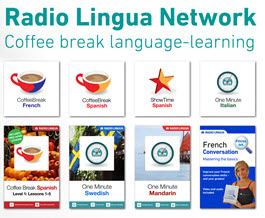
Radio Lingua Network offers one-minute podcasts in more than 20 languages, which you can download to your computer or mobile phone. The network also provides several lessons to learn French, German, Italian and Spanish languages.
here is a link to the 10 Arabic one-minute lessons:
http://radiolingua.com/category/shows/oml-arabic/
Many non-Arabic speaking choristers finds pronunciation of certain Arabic letters difficult, especially the letters ص (s), ض (d), ط (t), ظ (z), and ق (q).
Below is a link to a useful website with a flash video that should help our choristers master the use of these letters.
http://www.arabicpod.net/learnarabic/lesson/91/Letter_pronunciation
Click on the link below, then click on Visual Tutorial (as illustrated)

The Andalus Arabic Choir started term 3 yesterday. Rehearsals were conducted at Sydney University. The schedule for this term includes weekly rehearsals every Tuesday evening, with the last one to be held on December 2013.
New choristers are always welcome.
 Andalus Arabic Choir